
8 AI Rewriter Tools That Actually Sound Human (Ranked)

Thu
AI SEO Specialist, Full Stack Developer

Most AI rewriter tools can change the wording of a paragraph. That is not the hard part anymore, and honestly, it is not a very useful benchmark on its own.
The hard part is finding a tool that keeps the meaning, improves the flow, and does not turn your draft into the same polished-but-empty AI voice everyone recognizes.
I would not choose an AI rewriter by how many words it can process. I would choose it by the cleanup it saves after the rewrite. In my experience, a good rewriter makes the draft easier to publish. A weak one just gives you a different version of the same problem.
TL;DR: Best AI Rewriter Tools
If you want the short version, these are the best AI rewriter tools by use case:
| Tool | Best for | Why it stands out | Watch out for |
|---|---|---|---|
| Junia AI | SEO article rewriting | Strongest fit for turning rough or existing content into structured, search-ready drafts | More than you need for tiny sentence edits |
| Jasper AI | Marketing copy | Good for rewriting ads, emails, landing pages, and campaign assets in one workspace | Can feel too broad for simple paraphrasing |
| QuillBot | Fast paraphrasing | Quick modes for rewriting sentences and paragraphs | Longer text can still need manual cleanup |
| WordAi | Natural sentence restructuring | Better for aggressive rewrites than basic synonym swapping | Less useful as a full publishing workflow |
| Pre Post SEO | Utility rewriting | Handy when you want rewriting beside other lightweight SEO tools | Output quality is uneven |
| WriteSonic | Speed-focused marketing rewrites | Fast drafts for blogs and promotional copy | Needs closer review on nuanced topics |
| Frase.io | Answer-focused content | Useful when rewriting is tied to search intent and question coverage | Less direct as a pure rewriter |
| AISEO | SEO cleanup | Combines rewriting with optimization features | Less polished than dedicated editorial tools |
My practical pick: use Junia AI for SEO content rewrites, QuillBot for quick paragraph paraphrasing, Jasper for marketing teams, and WordAi when you mainly need natural-sounding sentence variation. I would not treat these as interchangeable tools; the right choice depends less on "AI quality" in the abstract and more on the kind of draft you are trying to rescue.
What Makes A Good AI Rewriter?
A modern AI rewriter is not the same thing as an old article spinner. A spinner swaps words. A rewriter should understand the sentence, preserve the point, and rebuild the phrasing in a cleaner way. That distinction matters because a fluent rewrite can still be a bad edit if it quietly changes the claim.
The best tools usually do five things well:
- Keep the original meaning intact.
- Rewrite at paragraph level, not only word level.
- Let you control tone, length, and formality.
- Improve readability without removing useful detail.
- Give you output that still feels editable, not final by default.
That last point matters. AI rewriters are most useful when you treat them as editing assistants, not as a publish button. They can help you get unstuck, clean rough passages, simplify dense copy, or reshape AI-generated text, but the final judgment still has to be human.
Google's guidance on using generative AI content says automation can be useful for research and structure, but content created at scale without added value can violate spam policies. That is a useful standard for rewriters too: the rewrite should add clarity, usefulness, and originality, not just variation.
How I Would Choose An AI Rewriter
The ranking below is based on the job I think most readers are actually trying to complete: rewriting existing text into something clearer, more natural, and more publishable.
Here are the criteria I would use before paying for a tool:
| Criterion | What to check |
|---|---|
| Rewrite quality | Does the text sound natural, or does it only swap words? |
| Meaning preservation | Does the output keep facts, claims, examples, and intent intact? |
| Tone control | Can it make text more formal, casual, persuasive, concise, or brand-specific? |
| Paragraph handling | Can it rewrite several connected sentences without breaking the logic? |
| Workflow fit | Does it work for your actual use case: essays, blogs, SEO, emails, sales copy, or bulk edits? |
| Review support | Does it help with grammar, readability, plagiarism, AI detection, or SEO checks? |
| Value | Is the free plan usable, and is the paid plan justified by the time saved? |
I am especially strict about meaning preservation. A rewrite that sounds smooth but changes the claim is worse than a clunky original draft, because the smooth version is harder to catch during review.
1. Junia AI
%20(1).png?token=eyJhbGciOiJIUzI1NiIsInR5cCI6IkpXVCJ9.eyJ1cmwiOiJ1c2VyLWdlbmVyYXRlZC1pbWFnZXMvZjJmOThkNWUtNjNjNC00MTJiLTkyY2QtZjgyNDI5NTE3YWRkL0dyb3VwIDM3OSAoMSkgKDEpLnBuZyIsImlhdCI6MTY5NzY5MTYzNywiZXhwIjoxODU1MzcxNjM3fQ.052L4fYGN91Nl8NzyEHJ6grwefZVpUyoMn_G1Oa1UMc)
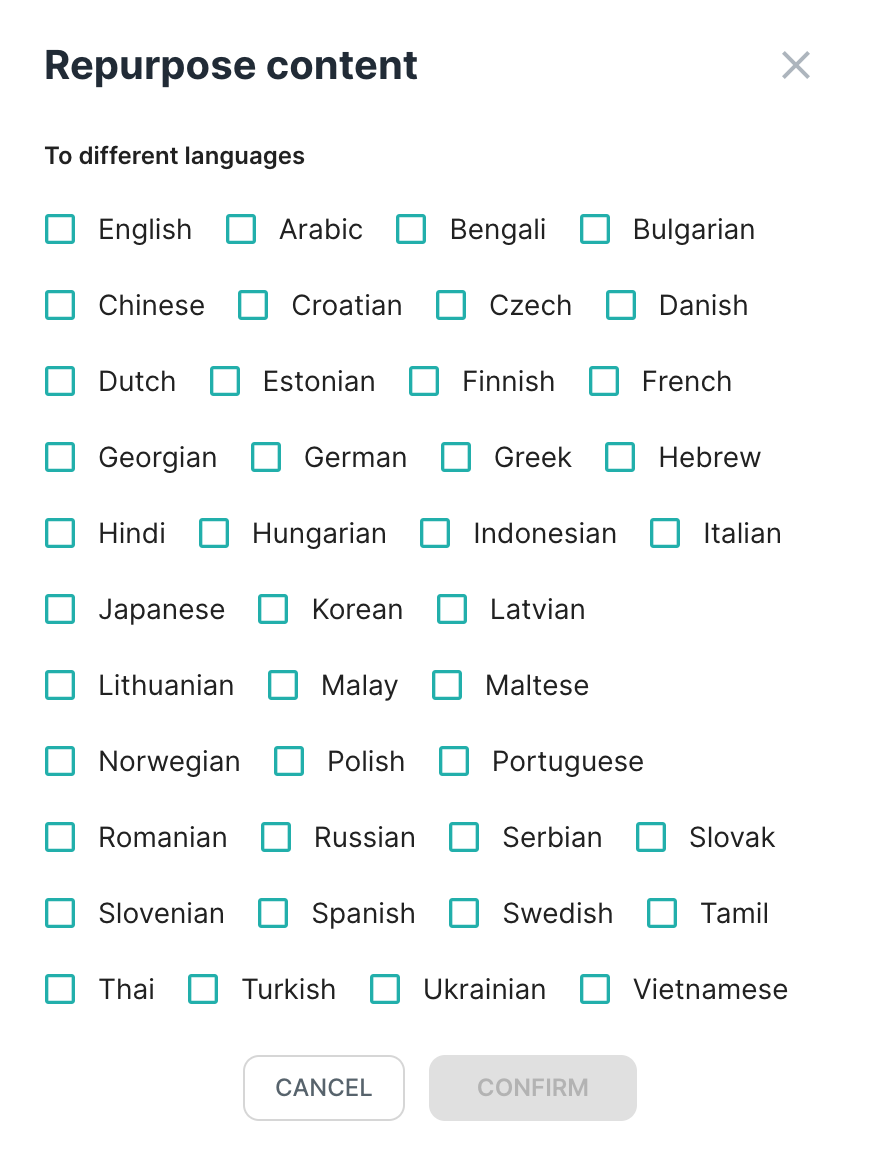
Junia AI is the best fit when rewriting is part of a serious SEO content workflow. It is not just for changing a few sentences. I like it more when the job is messy: turning rough source material, an existing page, or a weak draft into a structured article that can be edited, optimized, and published.
That matters because SEO rewriting is rarely just sentence cleanup. You usually need to sharpen the intent, rebuild headings, add missing examples, improve internal links, and make the page easier to scan. The sentence-level rewrite is often the smallest part of the job.
Best features:
- URL and source-based drafting for article refreshes.
- SEO-oriented structure instead of simple synonym replacement.
- Useful companion tools for the later editing pass. A reworder is helpful when one sentence still feels awkward after the main rewrite.
- Better fit for blog posts, SEO pages, and content operations than for one-off sentences.
What I like: Junia is strongest when the rewrite has a business goal. If you are refreshing an old article, building a new version from source material, or trying to make AI-assisted content more helpful, the workflow is closer to how editors actually work. I prefer that to tools that only hand back a cleaner paragraph and leave the page strategy untouched.
What could be better: It can be more tool than you need if all you want is a quick rewrite of a single sentence.
Verdict: Choose Junia AI if your rewrite needs structure, SEO alignment, and publishable article quality instead of quick paraphrasing.
2. Jasper AI
.webp?token=eyJhbGciOiJIUzI1NiIsInR5cCI6IkpXVCJ9.eyJ1cmwiOiJ1c2VyLWdlbmVyYXRlZC1pbWFnZXMvZjJmOThkNWUtNjNjNC00MTJiLTkyY2QtZjgyNDI5NTE3YWRkL1NjcmVlbnNob3RfMjAyMy0wOC0yNl9hdF8xMyAoMSkud2VicCIsImlhdCI6MTY5NzY5NDI0NCwiZXhwIjoxODU1Mzc0MjQ0fQ.cc3mHNIqXoJ_vE-a22EtIKQQgZ5tI1z7xUlwRPM7e8s)
Jasper AI is a strong general-purpose rewriting tool for marketing teams. It makes the most sense when rewriting is spread across several formats: ads, emails, landing pages, product copy, social posts, and blog sections.
The advantage is consistency. A team can set a brand voice and use Jasper to reshape different assets without starting from scratch each time. I would reach for it when the real problem is campaign consistency, not when one paragraph needs a lighter edit.
Best features:
- Brand voice controls for campaign consistency.
- Templates for marketing copy, ads, emails, and long-form content.
- Useful when one idea needs to be remixed into several formats.
What I like: Jasper is practical for teams that need speed and consistency across a lot of marketing copy. It is not limited to paragraph rewriting, which is both its strength and the reason it can feel oversized for simple edits.
What could be better: If you only need to clean up a short paragraph, Jasper can feel heavier than necessary. It is a marketing platform first and a simple rewriter second.
Verdict: Choose Jasper if rewriting is part of a broader marketing content system.
3. QuillBot
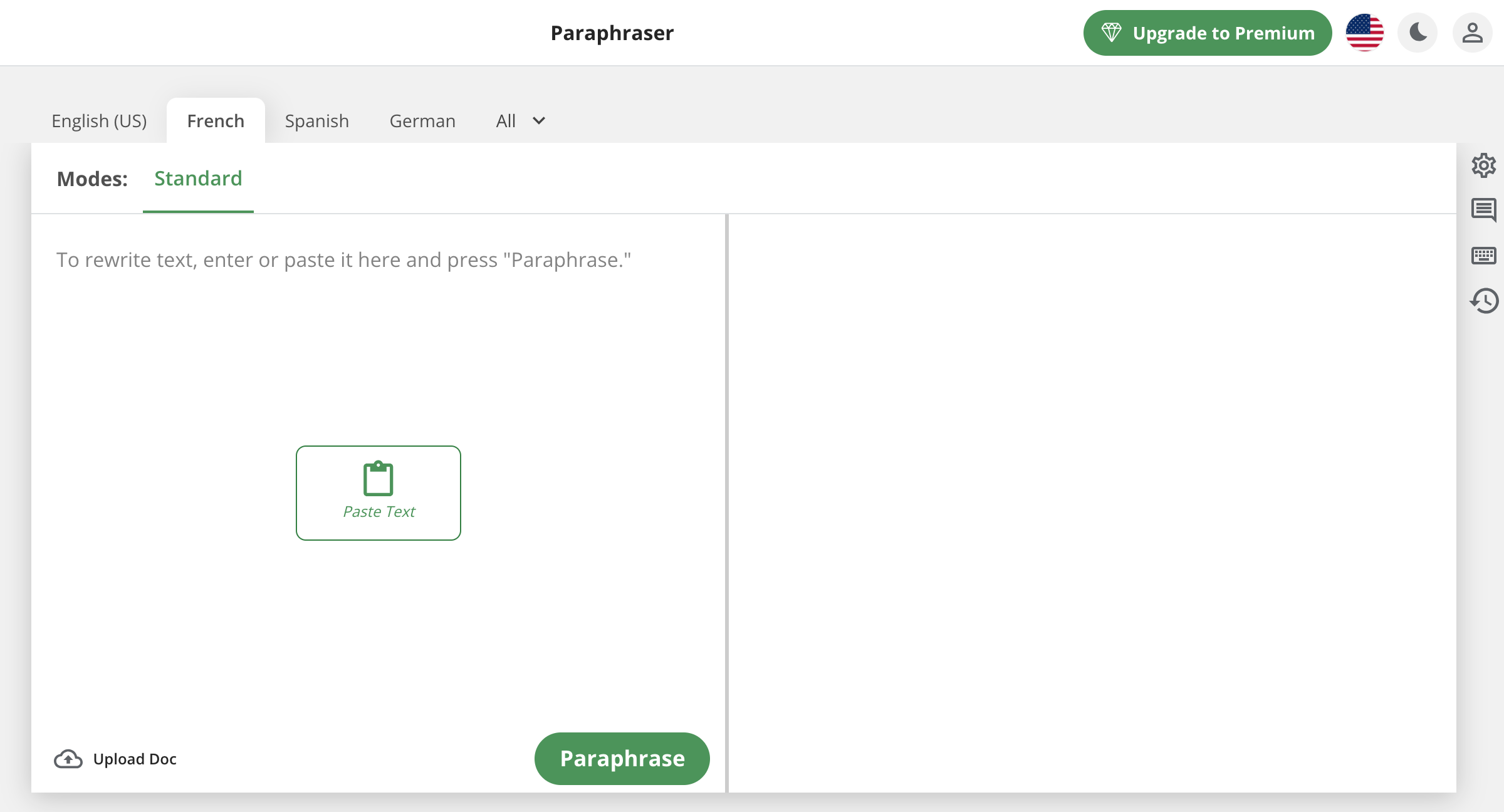
QuillBot is one of the easiest rewriters to recommend for quick paraphrasing. It is fast, familiar, and useful when you want several alternate versions of a sentence or paragraph without setting up a larger workflow.
The modes are the main appeal. You can push the output toward fluency, formality, creativity, or concision depending on what the passage needs.
Best features:
- Multiple paraphrasing modes.
- Simple interface for fast edits.
- Good for students, editors, non-native English writers, and anyone cleaning short passages.
- Helpful companion tools such as grammar checking and summarizing.
What I like: QuillBot is good at removing friction. Paste a clunky paragraph, pick a mode, and you quickly get options. I have found it most useful when I already know what the paragraph should say and just need a few cleaner phrasings to choose from.
What could be better: Longer rewrites can become repetitive or too synonym-heavy. I would use it section by section, then edit the final version manually.
Verdict: Choose QuillBot when you need fast paragraph rewriting more than a full article workflow.
4. WordAi
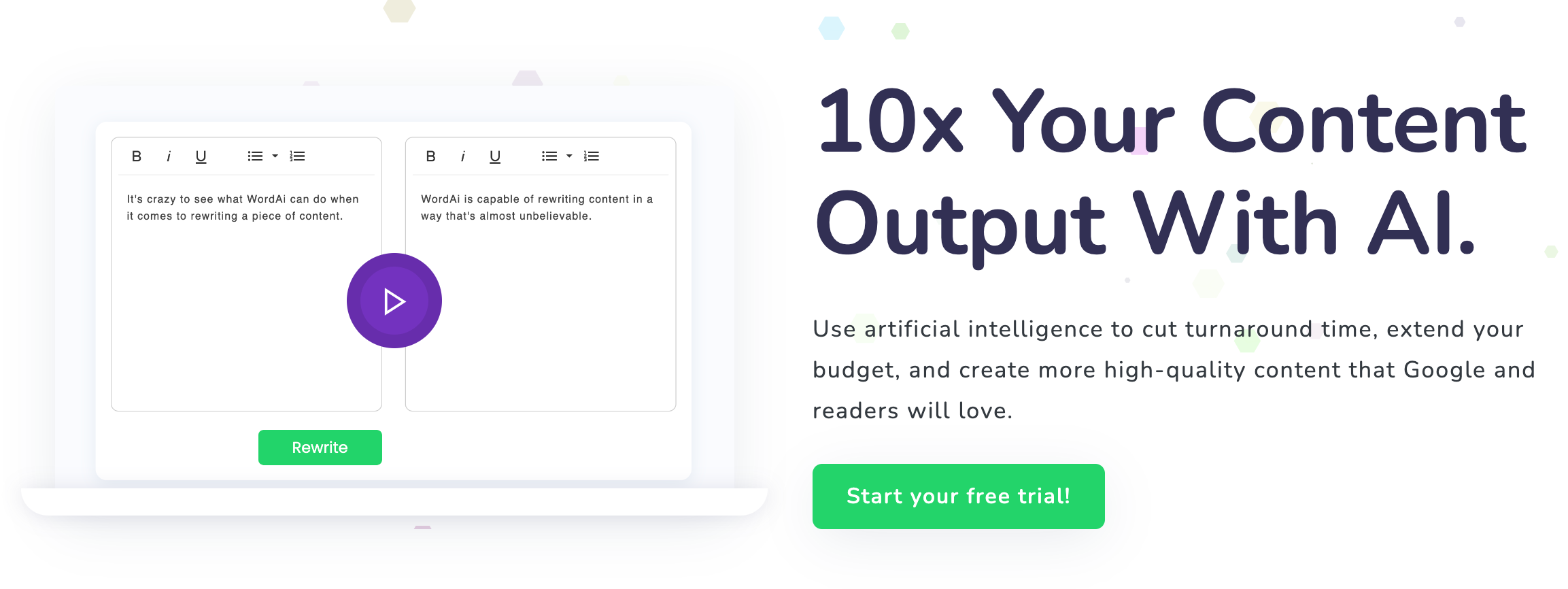
WordAi is built for deeper sentence restructuring. It is more useful than a basic rewording tool when you need the output to feel genuinely different while still keeping the original meaning.
This makes it useful for users who process a lot of text and want more variation than a simple paraphraser usually provides. I would be more cautious with it on expert content, where one small wording shift can change the promise of the paragraph.
Best features:
- Stronger sentence restructuring than basic synonym tools.
- Bulk rewriting support.
- Good fit when the source text sounds stiff and needs more natural flow.
What I like: WordAi is better when the problem is not grammar but rhythm. It can make rigid sentences feel more natural when the input is clear and the facts are already settled.
What could be better: Long, technical, or detail-heavy passages still need careful review. Aggressive rewriting can introduce small meaning shifts if you are not checking the output.
Verdict: Choose WordAi when you need natural-sounding variation at scale.
5. Pre Post SEO
Pre Post SEO is less polished than the best dedicated rewriters, but it is useful as a practical utility toolkit. The appeal is convenience: rewriting sits beside other lightweight SEO tools, so you can handle quick checks in one place.
I would not use it for delicate brand copy or an important article refresh. I would use it for fast, low-risk rewriting tasks where the output will still get a human review. That is a narrower recommendation, but it is the honest one.
Best features:
- Rewriting plus adjacent SEO utilities.
- Fast processing for simple edits.
- Useful when volume matters more than nuance.
What I like: It is straightforward and practical. For quick SEO-adjacent cleanup, that can be enough.
What could be better: The writing quality is inconsistent on niche, technical, or voice-sensitive content.
Verdict: Choose Pre Post SEO if you want a lightweight utility option, not a premium editorial workflow.
6. WriteSonic
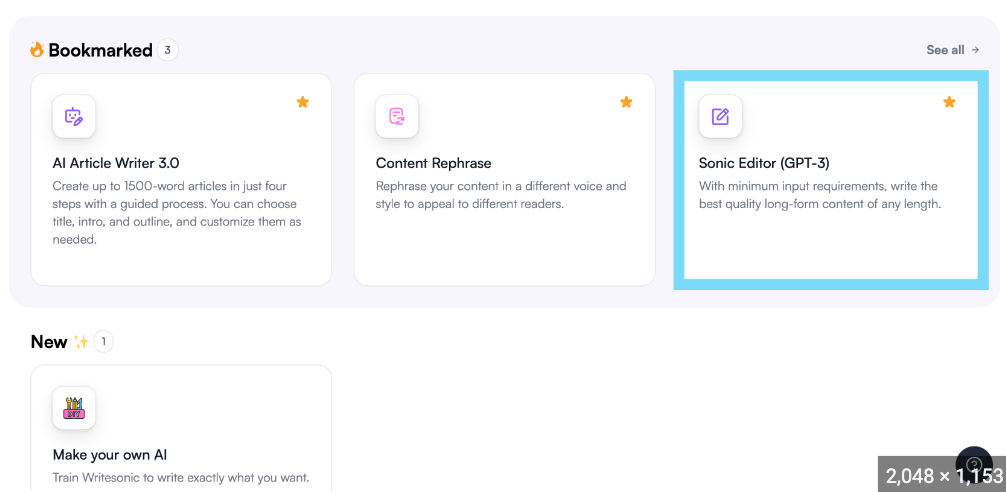
WriteSonic is a speed-first writing platform with useful rewriting features for marketing content. It is strongest when you need a readable draft quickly and you are comfortable doing a final edit yourself.
The Sonic Editor is helpful because it keeps rewriting and cleanup in the same workspace. That matters when you are moving through several pieces of content and do not want to copy text between tools. I would still keep a stricter review step for anything technical, financial, medical, legal, or product-specific.
Best features:
- Fast rewriting for blogs, ads, product copy, and landing pages.
- Broad marketing workflow.
- Useful editor for refining generated copy.
What I like: WriteSonic is good when momentum matters. It gives you a workable draft quickly, which can be useful as long as speed does not become a substitute for accuracy.
What could be better: On complex topics, the output can sound smoother than it is accurate. I would still verify claims, examples, and product details.
Verdict: Choose WriteSonic if speed matters and your team already has an editing step.
7. Frase.io
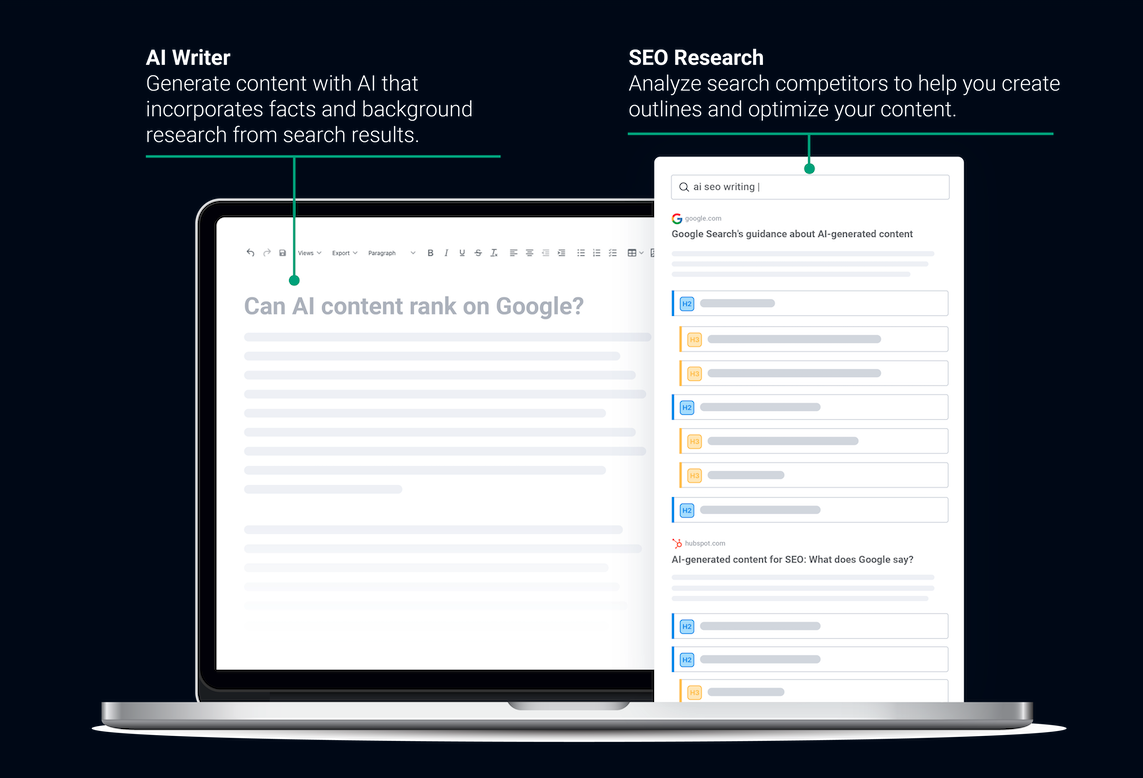
Frase.io is useful when rewriting is connected to research, search intent, and answer coverage. It is less of a simple paraphraser and more of a content optimization tool.
That makes it relevant for pages that need to answer specific questions clearly. If a draft is missing subtopics, FAQs, or intent coverage, Frase can help you see what needs to be rebuilt. Personally, I see this as a planning advantage more than a rewriting advantage.
Best features:
- Content research and topic coverage support.
- Helpful for question-led pages and answer-focused content.
- Better strategic layer than simple sentence rewriters.
What I like: Frase helps with the part of rewriting that many tools ignore: deciding what the page should cover before you polish the wording.
What could be better: It is not the most streamlined option if you only want to rewrite a paragraph.
Verdict: Choose Frase.io if your rewrite needs stronger search intent coverage and clearer answers.
8. AISEO

AISEO sits in the overlap between rewriting and SEO cleanup. It is a reasonable option if you want content enhancement features rather than a plain paraphrasing box.
I would look at AISEO for users who want to improve readability, adjust phrasing, and think about optimization in the same pass. It is not my first pick for a full article operation, but it makes sense when the rewrite and SEO cleanup are happening together.
Best features:
- SEO-focused rewriting and enhancement.
- Useful for content cleanup and optimization.
- Better fit for SEO users than purely academic rewriters.
What I like: It is trying to solve the right problem: rewriting should improve the page, not just change the wording.
What could be better: It can feel less integrated than stronger content workflow tools.
Verdict: Choose AISEO when SEO cleanup matters more than simple paraphrasing.
AI Rewriter Vs Paraphraser Vs Humanizer
These labels overlap, but they are not identical.
| Tool type | Main job | Best use |
|---|---|---|
| AI rewriter | Rebuilds phrasing, structure, tone, or flow | Improving paragraphs, drafts, articles, and marketing copy |
| Paraphraser | Rephrases text while staying close to the original | Creating alternate versions of a sentence or paragraph |
| Humanizer | Makes AI-generated text sound less robotic | Smoothing generic AI drafts before editing |
| Reworder | Changes wording lightly | Fixing repetitive or awkward phrasing |
| Text simplifier | Makes text easier to understand | Reducing complexity without losing the point |
If you are starting with human-written text, use a rewriter or paraphraser. If you are starting with stiff AI output, a humanizer can help, but I would still do a manual pass after it. The tool can soften the surface; it cannot invent real judgment for you.
If the draft is too complex, simplify the idea before changing the tone. A text simplifier is often a better first step than asking for a more "human" version of a paragraph that is already hard to follow.
For a deeper distinction, the most important difference between an AI humanizer and a paraphraser is intent: one tries to make machine-like text sound natural, while the other tries to express the same meaning in different words.
How To Use An AI Rewriter Without Making The Draft Worse
The best rewrite workflow is simple, but it does require restraint:
- Clean up the source text first. Remove factual errors, broken logic, and vague claims before asking AI to improve the wording.
- Rewrite one section at a time. Paragraph-level context helps, but whole-document rewrites can flatten voice. I usually get better results by treating each section as its own editing problem.
- Give the tool a clear instruction. Say whether you want the result shorter, warmer, more formal, more direct, or easier to read.
- Compare the rewrite against the original. Check meaning, facts, names, numbers, and examples.
- Edit the final version yourself. AI can improve phrasing, but you still need rhythm, judgment, and source checking.
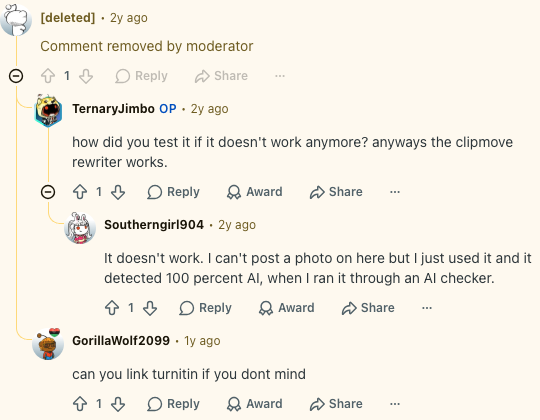
For AI-generated drafts, I would also use an AI text detector as a rough diagnostic, not as a final truth machine. If a passage gets flagged, the real question is not "how do I trick the detector?" It is "why does this paragraph sound generic, repetitive, or unsupported?"
Public writing forums are full of the same pattern: people try a "humanizer," run the result through a checker, and still end up with text that does not feel convincingly edited. I have seen this happen often enough that I would treat detector scores as a warning light, not the destination. One WritingWithAI discussion about rewriting AI text is a useful reminder that detector-chasing is a weak substitute for a real editorial pass.
That is where a human edit matters. Add specific examples, replace vague claims, vary sentence rhythm, and explain the reasoning behind your recommendation. These are the techniques that usually make AI-generated text easier to edit and more useful for readers. They also make the piece feel owned, which is the part most rewrite tools miss.
Can AI Rewriters Help With SEO?
Yes, but only when the rewrite improves the page. That sounds obvious, but it is where many SEO rewrites fail.
An AI rewriter can help you refresh stale articles, clarify dense sections, create better summaries, improve readability, and turn rough notes into cleaner copy. Those things can support SEO because they make the page easier to read and more satisfying to use. I would count that as meaningful optimization.
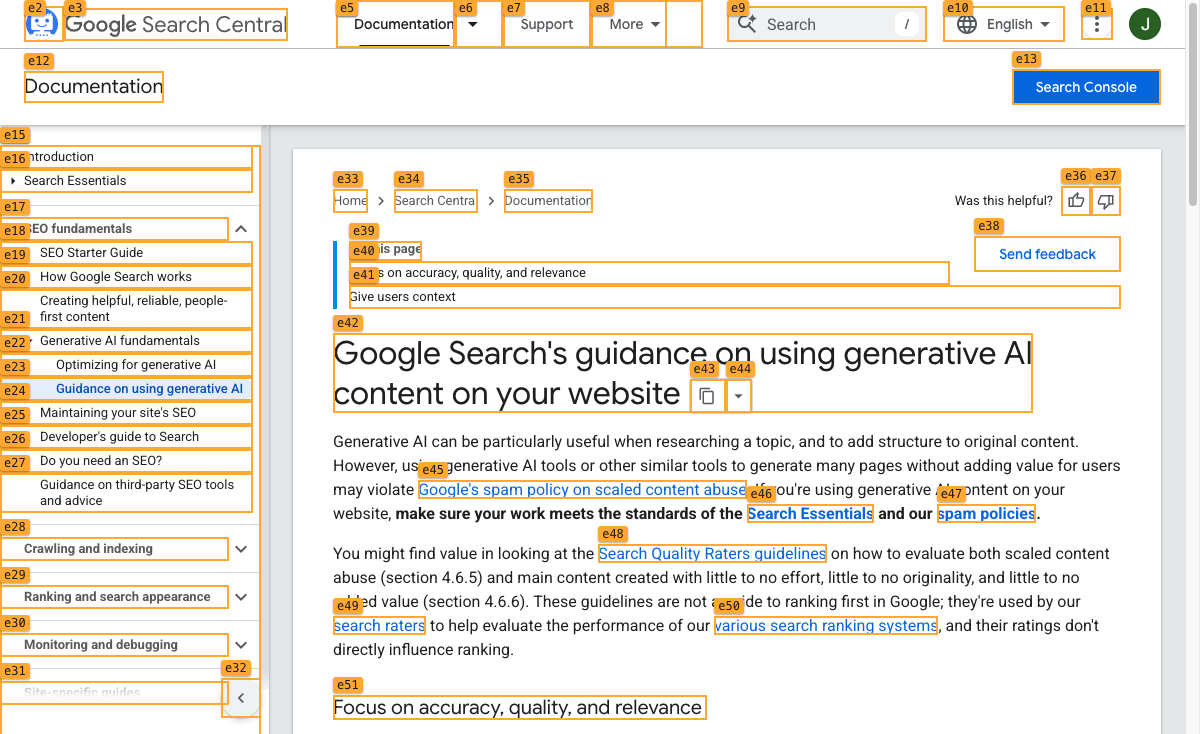
But rewriting a competitor article into slightly different words is not a serious SEO strategy. It is also a lazy one. Google's AI search guidance says the fundamentals still matter for generative search experiences: create unique, helpful, reliable content and avoid thin content created mainly to manipulate rankings or AI responses. Google's AI optimization guide also makes a practical point that is easy to forget: there is no special "AI search writing style" you need to chase.
For SEO rewrites, I would focus on this checklist:
- Does the article answer the query faster than before?
- Did you add original examples, screenshots, comparisons, or judgment?
- Are claims checked against current sources?
- Is the structure easier to scan?
- Are internal links useful instead of forced?
- Does the page say something competitors do not?
If the answer is no, the rewrite is probably cosmetic. I would rather publish one sharper original section than ten lightly reworded ones.
Common Mistakes To Avoid
The first mistake is rewriting too aggressively. If the original paragraph contains an important claim, statistic, quote, or product detail, preserve the meaning before you improve the style. I have seen otherwise decent rewrites become worse because they sanded off the one detail that made the paragraph useful.
The second mistake is chasing AI detector scores. Detector-focused rewriting can make text sound less natural and can sometimes change the meaning. A better goal is to add specificity, proof, and human judgment. Specific human-editing examples are a better target than trying to make every detector say "human."
The third mistake is publishing the first rewritten output. AI rewriters often produce fluent language that looks finished before it has been fact-checked. Smoothness is not the same as accuracy.
The fourth mistake is using the same mode for every job. A sales page, academic paragraph, support article, and SEO blog post need different rewrite settings.
The fifth mistake is ignoring readability. A rewrite is not better if it uses fancier words. It is better when the reader understands the point faster.
Final Recommendation
If you need one AI rewriter for SEO content, I would start with Junia AI because it is built around the larger article workflow, not just sentence variation.
If you need a fast paraphrasing tool, QuillBot is the simplest starting point. If you write marketing copy at scale, Jasper or WriteSonic will fit better. If you mainly need natural sentence restructuring, WordAi is worth considering.
The bigger lesson is this: do not judge a rewriter by how different the output looks. Judge it by how much better the final draft becomes after review.
The best AI rewriter is the one that preserves your meaning, improves clarity, and still leaves room for your own judgment. That is the part I would not outsource.