
SEO Best Practices for 2026: What Still Works in AI Search

Thu
AI SEO Specialist, Full Stack Developer

SEO in 2026 is not about choosing between "traditional SEO" and "AI SEO." I think that framing sends teams in the wrong direction because it makes the work sound newer than it really is.
The pages that win still do the basics well: they answer the query, load quickly, earn trust, use clear structure, and help search engines understand what the page is about. The difference is that your content now has to work in more places. It can appear in classic blue links, AI Overviews, AI Mode, Google Images, video results, local packs, and AI assistants that summarize the web before a user ever clicks.
Google's own guidance for AI features is pretty clear here: the same SEO fundamentals still apply to AI features, and there is no special schema or separate technical requirement for appearing in AI Overviews or AI Mode. Your page needs to be crawlable, indexable, useful, structured, and eligible to show a snippet. In practice, the pages I trust most are not chasing a separate AI playbook. They are simply easier to understand, verify, and cite.
So the best SEO practices for 2026 are not hacks. They are a tighter version of what strong SEO should have been all along:
| Priority | What to fix first | Why it matters |
|---|---|---|
| 1 | Match search intent | If the page does not answer the real query, nothing else saves it. |
| 2 | Prove experience and trust | AI can summarize generic advice. It cannot fake first-hand proof very well. |
| 3 | Build topic clusters | Strong internal links help Google and AI systems understand your coverage. |
| 4 | Keep technical SEO clean | Crawlability, speed, mobile UX, and structured data still decide whether content can be found and used. |
| 5 | Optimize for clicks and citations | You need titles, summaries, tables, examples, and answers that people and AI systems can reference. |
Let's go through the SEO best practices I would actually spend time on in 2026.
1. Start With Search Intent, Not Keyword Volume
2026 practice checklist
- Intent mapped before outline
- Claims a model cannot invent (data, screenshots, process)
- Internal links to supporting cluster pages
- Core Web Vitals not blocking mobile UX
- Schema only where the page type matches
Keyword research still matters. But if you treat keywords as the goal, you will create the wrong pages.
The real goal is to understand what the searcher wants to do. I usually care less about the keyword itself and more about the job behind it.
Someone searching "SEO best practices 2026" does not need a history lesson about what SEO is. They want to know what has changed, what still works, what to prioritize, and how to avoid wasting time on outdated advice.
That is why I like to map every target keyword to one of these intent types before writing:
| Intent type | Example query | Best content format |
|---|---|---|
| Informational | "what are core web vitals" | Clear explanation, examples, glossary |
| Commercial | "best SEO tools for small business" | Comparison, pros and cons, pricing notes |
| Transactional | "Semrush pricing" | Product page, offer page, trial page |
| Comparative | "Ahrefs vs Semrush" | Side-by-side comparison |
| Local | "SEO agency near me" | Local landing page, Google Business Profile, reviews |
| Problem-solving | "why is my page not indexed" | Diagnostic guide or checklist |
This is where a lot of sites still go wrong. They chase a big keyword, write one broad article, and try to cram every related topic into it. I have seen this create the same problem again and again: a page that is too shallow for competitive terms and too vague for long-tail terms.
A better approach is to build a topic cluster:
- One main page for the broad subject.
- Supporting pages for subtopics, tools, comparisons, problems, and use cases.
- Internal links that connect those pages naturally.
For example, a broad SEO strategy hub can introduce AI SEO as the main concept, then use supporting pages for specific jobs.
If you want to speed up the planning stage, we at Junia AI have created an AI keyword research tool that you can to group keywords by intent before you draft. Our SEO content brief generator can then turn that intent map into headings, questions, and coverage notes.
For deeper competitive research, compare tools by job. Semrush is useful for broad market and keyword data, while Ahrefs is stronger for backlink and content research.
When the question is how to improve one page against the current SERP, Junia AI is the more focused comparison.
The important part is judgment. A tool can show you the phrases. You still have to decide what page should exist, what the page should answer, and what would make it better than what already ranks. That last decision is where most of the SEO value lives.
2. Write Content That AI Cannot Easily Replace
Generic informational content is getting squeezed. Personally, I would not invest much in another basic "what is X" article unless the page has a sharper angle, better proof, or a clear role inside a topic cluster.
If your article only repeats definitions, basic steps, and obvious tips, an AI Overview can summarize that in a few seconds. That does not mean blogging is dead. It means the weak version of blogging is dead.
Strong content in 2026 needs at least one of these:
- First-hand testing.
- Original examples.
- Screenshots or product evidence.
- Clear opinions based on experience.
- Specific tradeoffs.
- Real workflows.
- Current data or citations.
- A sharper answer than the pages already ranking.
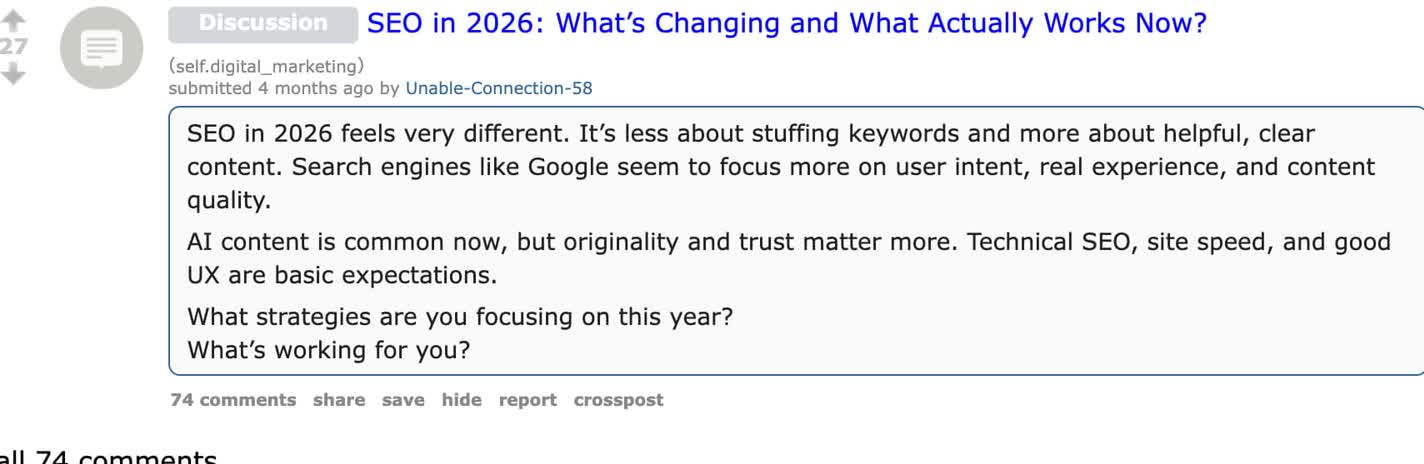
Google's helpful content guidance says its ranking systems are designed to reward helpful, reliable information created for people, not content made mainly to manipulate search rankings. That sounds obvious, but it is the simplest filter for editing your own content.
Before publishing, I would ask:
- Would this article still be useful if Google did not exist?
- Does it include anything from real experience?
- Does it make a clear decision easier?
- Would another writer, journalist, or AI system have a reason to cite it?
- Is it better than a generic summary of the topic?
For example, if you are writing about AI content, do not just say "AI content can rank." Show what kind of AI-assisted content performs, where it fails, and how human editing changes the result. A page like Does AI content rank in Google? is more useful when it explains the conditions behind ranking, not just the yes/no answer.
This also matters for E-E-A-T: experience, expertise, authoritativeness, and trustworthiness. You do not prove those with a badge in the sidebar. You prove them in the content itself. I am much more persuaded by one specific example from a real workflow than by three vague claims about expertise.
Good signs include:
- Author details that explain why the writer knows the topic.
- Transparent dates and update notes.
- Examples from real projects.
- Clear citations for factual claims.
- No fake certainty around topics that are still changing.
- Practical warnings about what does not work.
If you use AI to draft content, use it as a production assistant, not as the final voice. Bulk publishing hundreds of generic posts can still damage quality, brand trust, and long-term SEO performance. The risk is not AI by itself; it is bulk AI content generation without editorial standards, useful examples, or a reason for each page to exist. My bias is simple: if no one on the team can explain why a page deserves to exist, it probably should not ship.
3. Make Pages Easy for AI Search to Parse and Cite
AI Overviews and AI assistants do not remove the need for SEO. They raise the standard for clarity.
Google says AI features rely on the same core SEO requirements: crawlable pages, indexable content, internal links, good page experience, text that can be understood, useful media, and structured data that matches the visible page.
That means the practical work is not mysterious:
- Use a clear H1 that describes the page.
- Answer the main question early.
- Use H2s and H3s that match real subquestions.
- Add concise definitions where readers need them.
- Include tables when comparison helps.
- Use short summaries or checklists for complex sections.
- Keep important information in HTML text, not only inside images.
- Add structured data only when it accurately matches the visible content.
Here is the simple rule I use:
If a human can scan the page and quickly understand the answer, an AI system has a better chance of parsing and summarizing it correctly.
This is also why "GEO" and "AEO" advice can get overcomplicated. Yes, AI search changes the surface. But the work still comes back to retrievable, trustworthy, well-structured content. I would rather fix a confusing section, add a useful table, or cite a stronger source than rename the same work with a new acronym.
If you want to optimize for AI-assisted discovery, focus on these content assets:
| Asset | Why it helps |
|---|---|
| Short direct answers | Useful for snippets, AI summaries, and voice-style answers. |
| Comparison tables | Easy to quote, summarize, and reuse in decision-stage queries. |
| Original examples | Harder for competitors and AI tools to copy convincingly. |
| Clear entity names | Helps systems connect your brand, product, author, and topic. |
| Internal links | Shows topical relationships across your site. |
| Source-backed claims | Makes the page more trustworthy and easier to reference. |
Do not add fake FAQ sections, hidden text, or schema that does not match the page. That is not optimization. It is noise.
4. Build Topic Authority With Internal Links
Internal linking is still one of the highest-leverage SEO practices because it helps both readers and crawlers move through your site. It is also one of the easiest areas to overdo.
The mistake is treating internal links like decoration. A random "read more" link at the end of a paragraph does not do much. A useful internal link should help the reader take the next logical step.
For example:
- A page about keyword research can link to a tool for finding keywords.
- A page about AI search can link to a guide on structured data.
- A beginner SEO article can link to more advanced technical SEO or authority-building guides.
- A local SEO section can link to a niche local guide, such as SEO for family law firms, when the example fits.
Anchor text matters too. Use descriptive anchors that explain the destination.
Weak:
- Click here.
- Read this.
- Learn more.
Better:
Do not overdo it. A page with 60 internal links is not automatically stronger than a page with 12 good ones. In most audits, I would rather remove five weak links than add five more mediocre ones. The goal is to clarify the site structure and help the reader, not stuff the article with anchors.
A practical internal linking workflow:
- List the main search intent of the article.
- Find 5-10 closely related pages.
- Add links where the reader naturally needs more depth.
- Use varied, descriptive anchor text.
- Link from supporting pages back to the main page.
- Recheck old posts when you publish a new page.
This is especially important if you are building topic clusters. Your pillar page and supporting pages should reinforce each other. Search engines need to see the relationship, and users need an obvious path through the topic.
5. Refresh On-Page SEO Without Over-Optimizing
On-page SEO is not glamorous, but it still decides whether a page earns the click.
Start with the title tag. It should tell the searcher exactly why this page is worth opening. Put the main topic near the front, but do not write a lifeless title just to fit a keyword.
Good title tags usually do three things:
- Name the topic clearly.
- Match the search intent.
- Add a reason to click.
For example:
- "SEO Best Practices for 2026: What Still Works"
- "9 SEO Best Practices for AI Search and Google"
- "SEO Best Practices: A Practical 2026 Checklist"
If you need help drafting options, use a meta title generator, then edit the result manually. The same applies to a meta description generator. Tools are useful for options, but the final version should sound like a real promise to the reader. I often use generated titles as raw material, then throw away the ones that feel clever but vague.
For meta descriptions, remember that Google may rewrite them. Still, they are worth writing because they force you to clarify the page's value.
A strong meta description should:
- Stay around 140-160 characters when possible.
- Mention the core topic naturally.
- Explain what the reader will get.
- Avoid vague claims like "unlock success" or "transform your strategy."
Headings need the same discipline. Your H2s should not read like generic essay headings. They should act like signposts.
Weak:
- "The Power of Technical SEO"
- "Understanding Content"
- "The Future of Search"
Better:
- "Fix Crawlability Before You Rewrite Content"
- "Write Content That AI Cannot Easily Replace"
- "Measure Visibility Beyond Organic Traffic"
This helps readers scan the page, and it helps search engines understand the structure.
6. Fix Core Web Vitals and Mobile UX
Technical SEO still matters because search engines cannot reward a page they cannot crawl, render, or understand.
The Core Web Vitals you should watch in 2026 are:
| Metric | What it measures | Good threshold |
|---|---|---|
| LCP | How quickly the main content loads | 2.5 seconds or faster |
| INP | How responsive the page feels after user interaction | 200 milliseconds or faster |
| CLS | How visually stable the page is while loading | 0.1 or lower |
One important update: do not optimize around First Input Delay anymore. Interaction to Next Paint replaced FID as a Core Web Vital because it gives a better view of page responsiveness across the full visit.
Use Google Search Console's Core Web Vitals report to find affected URL groups. Then diagnose individual templates with PageSpeed Insights or Lighthouse.
The most common fixes are still practical:
- Compress and resize images.
- Serve modern image formats.
- Lazy load non-critical images and videos.
- Remove unused JavaScript.
- Delay non-essential third-party scripts.
- Reserve width and height for images, ads, and embeds.
- Make text visible while fonts load.
- Keep navigation usable on mobile.
- Avoid popups that block the main content.
Mobile UX deserves special attention because Google primarily uses the mobile version of your site for indexing and ranking. If your desktop page is polished but your mobile page has cramped buttons, hidden content, slow scripts, or broken layout, that is the version search engines and users are likely judging.
For long-form articles, also check basic reading experience:
- Is the intro visible quickly?
- Are paragraphs short enough on mobile?
- Is the table of contents usable?
- Do tables fit the screen?
- Are images helpful and not oversized?
- Do ads or widgets interrupt the article?
Technical SEO is not just a developer checklist. It is part of content performance. I have seen otherwise strong articles underperform because the mobile reading experience was slow, cramped, or interrupted by layout shifts.
7. Use Structured Data Where It Matches the Page
Google Search Console performance reports training
Use Search Console to verify which of these practices actually move impressions — not the other way around.
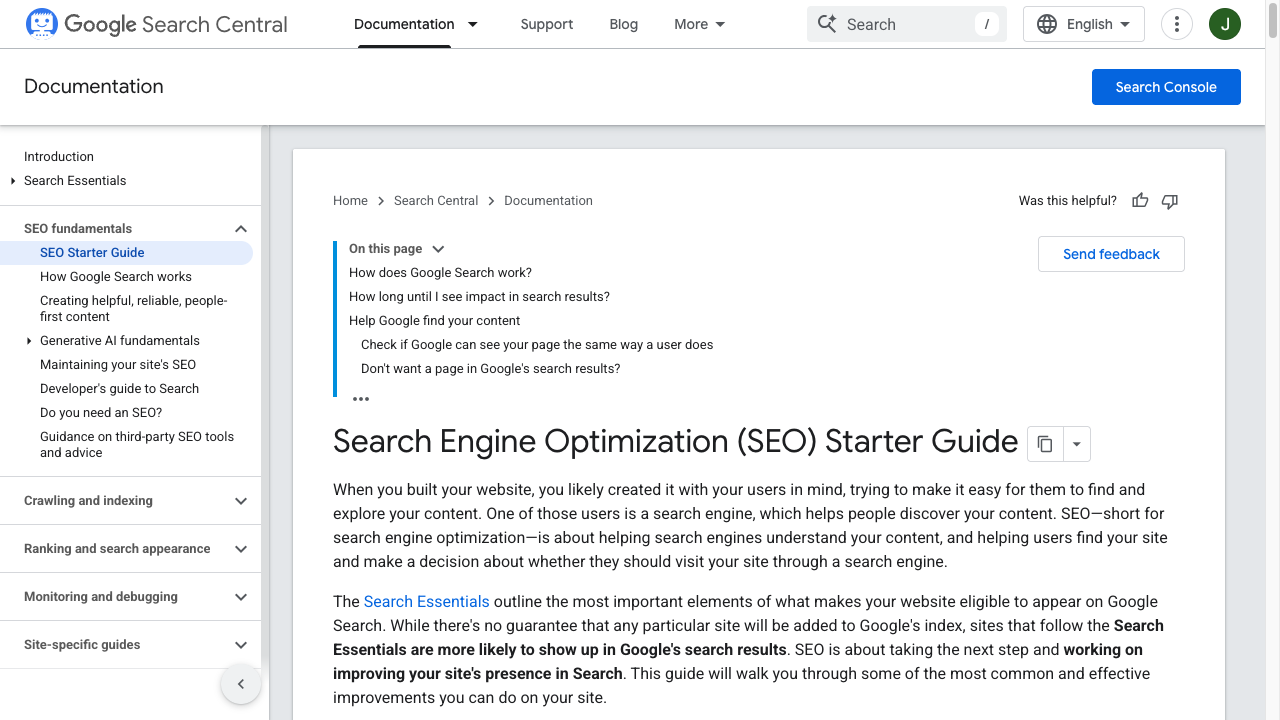
Structured data helps search engines understand your content and can make pages eligible for richer search appearances. It does not guarantee rankings, and it should not be used to describe content that users cannot see.
For most content sites, the useful schema types are:
- Article schema for blog posts and editorial pages.
- Breadcrumb schema for site hierarchy.
- Organization schema for brand details.
- Product schema for product pages.
- Review schema only when the page actually contains eligible reviews.
- Video schema for pages with original or embedded video content.
- LocalBusiness schema for local service pages.
The key is accuracy. Your structured data should match the visible text, page type, and actual content. I treat schema as clarification, not decoration.
This is especially important in AI search because clear entities matter. If your article mentions a product, author, brand, location, or service, make sure the page makes those relationships obvious in the visible copy and site structure. Schema can support that, but it cannot rescue a vague page. If the human reader cannot tell what the relationship is, I would not expect a machine system to infer it reliably.
For SEO teams using AI workflows, AI structured data for SEO can help identify markup opportunities, but you still need human review before anything goes live.
8. Treat Images and Video as Search Assets
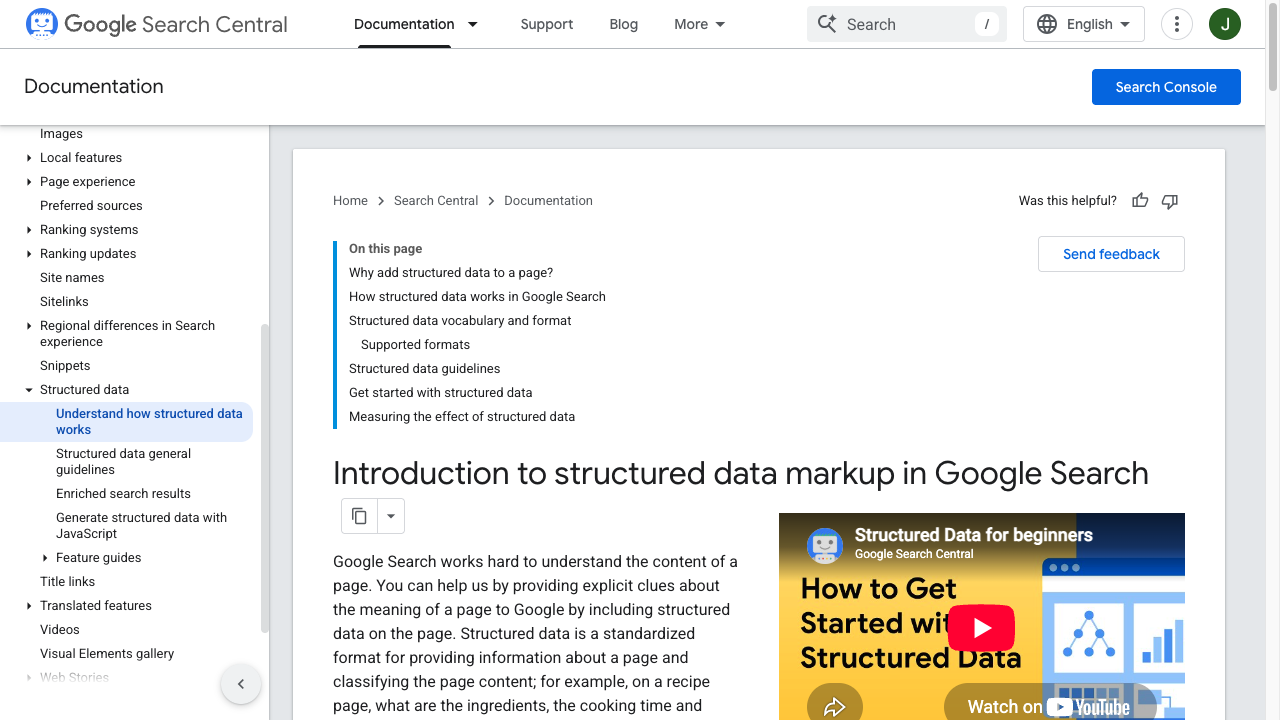
Images and videos are not just engagement extras anymore. They help with trust, explain complex ideas faster, and can create additional visibility in image, video, Discover, and AI-assisted results.
For images:
- Use original screenshots, diagrams, charts, or product images when possible.
- Add descriptive file names.
- Write alt text that explains the image naturally.
- Compress images before publishing.
- Avoid generic stock photos that add no information.
- Put important text in the article body, not only inside an image.
For videos:
- Embed a relevant video when it genuinely helps the topic.
- Add a short summary near the embed.
- Use video schema when appropriate.
- Keep the page fast by lazy loading embeds.
- Turn strong videos into supporting blog sections, not just isolated media.
I would not add a YouTube embed to every SEO article automatically. But if you have a strong walkthrough, audit process, product demo, or expert explanation, video can make the page more useful and more credible. The test is whether the media answers something faster or better than text alone.
The best use case is turning a high-value written guide into a companion video, then embedding the video in the article. That gives readers two ways to learn and gives the brand another discovery surface.
9. Build Authority With Proof, Not Just Backlinks
Backlinks still matter, but "more links" is not a strategy by itself. I am more interested in whether the page gives someone a reason to mention it.
The better question is: why would someone cite your page?
Strong link-worthy assets include:
- Original research.
- Benchmark reports.
- Free tools.
- Templates.
- Data visualizations.
- Expert quotes.
- Strong opinion pieces with evidence.
- Clear definitions for emerging topics.
- Comparison pages that save readers time.
This is where many SEO campaigns fall flat. They publish generic posts and then try to build links to content that nobody would naturally reference. I have never liked that sequence. Outreach becomes much easier when the asset is actually useful.
You can also build authority without relying only on traditional backlinks:
- Earn mentions in newsletters and industry roundups.
- Appear on podcasts.
- Publish original data journalists can cite.
- Build branded search demand through social and video.
- Create tools people bookmark.
- Improve author pages and editorial transparency.
- Claim unlinked brand mentions.
If your site is new or does not have many links yet, read this guide on how to grow SEO without backlinks. It is still possible to gain traction by targeting low-competition, high-intent topics and building strong topical coverage before chasing the hardest keywords.
10. Optimize for Local SEO When Location Matters
Local SEO is not relevant to every website, but when it matters, it really matters.
For local businesses, the basics are still powerful:
- Claim and complete your Google Business Profile.
- Keep your name, address, and phone number consistent.
- Add accurate categories and services.
- Publish photos that show the real business.
- Collect and respond to reviews.
- Build location pages for real service areas.
- Add LocalBusiness schema where appropriate.
- Create content around local problems, laws, neighborhoods, and customer questions.
Do not stuff city names into every sentence. Local SEO works best when the page genuinely reflects local expertise. If the copy would read the same after swapping in another city, it probably is not local enough.
For example, a law firm should not publish a generic "family lawyer" page and swap city names with automation. It should answer the questions people in that market actually ask, show local proof, and build trust. SEO for family law firms is a useful example because niche and local context change the page angle, proof, and calls to action.
11. Measure Visibility Beyond Rankings
Rank tracking is still useful, but it is not enough in 2026.
AI Overviews, zero-click searches, featured snippets, video results, Reddit threads, local packs, and brand mentions can all affect whether SEO is working. Some searches may influence buyers without producing a clean organic click.
Pew Research Center found in 2025 that Google users were less likely to click result links when an AI summary appeared. That does not mean you should abandon SEO. It means you need to measure more than traffic alone.
Track:
- Organic clicks.
- Impressions.
- Click-through rate.
- Conversions from organic visitors.
- Assisted conversions.
- Branded search growth.
- Rankings across priority topics.
- AI Overview appearances when you can observe them.
- Mentions in AI assistants or third-party answer engines.
- Engagement from pages that receive fewer but higher-intent visits.
This is where Search Console, GA4, rank tracking, and manual SERP reviews all matter. You are not just asking "Did traffic go up?" You are asking "Are we becoming more visible and trusted for the topics that matter to the business?" I find that second question leads to better decisions, especially when AI summaries reduce clicks but still shape demand.
The business case is also changing because AI search can influence buyers before they click. Measuring AI search ROI without clicks means looking beyond sessions and tracking branded demand, assisted conversions, and whether your content is cited or summarized in discovery journeys.
12. Refresh Old Content Before Publishing More
One of the easiest SEO wins is improving pages you already have. If I had limited time, I would usually refresh a promising page before publishing another average one.
Old content often has existing impressions, backlinks, and internal links. If the article is outdated, thin, slow, or poorly matched to intent, a refresh can outperform a brand-new post.
Use this content refresh checklist:
| Check | What to look for |
|---|---|
| Intent | Does the article still answer the query people use today? |
| Date | Are examples, screenshots, tools, and stats current? |
| Structure | Can readers find the answer quickly? |
| Metadata | Are the title and description still click-worthy? |
| Internal links | Does the page link to newer related content? |
| Evidence | Are important claims supported? |
| Media | Would screenshots, tables, or video make it more useful? |
| Technical SEO | Is the page fast, mobile-friendly, indexable, and canonicalized correctly? |
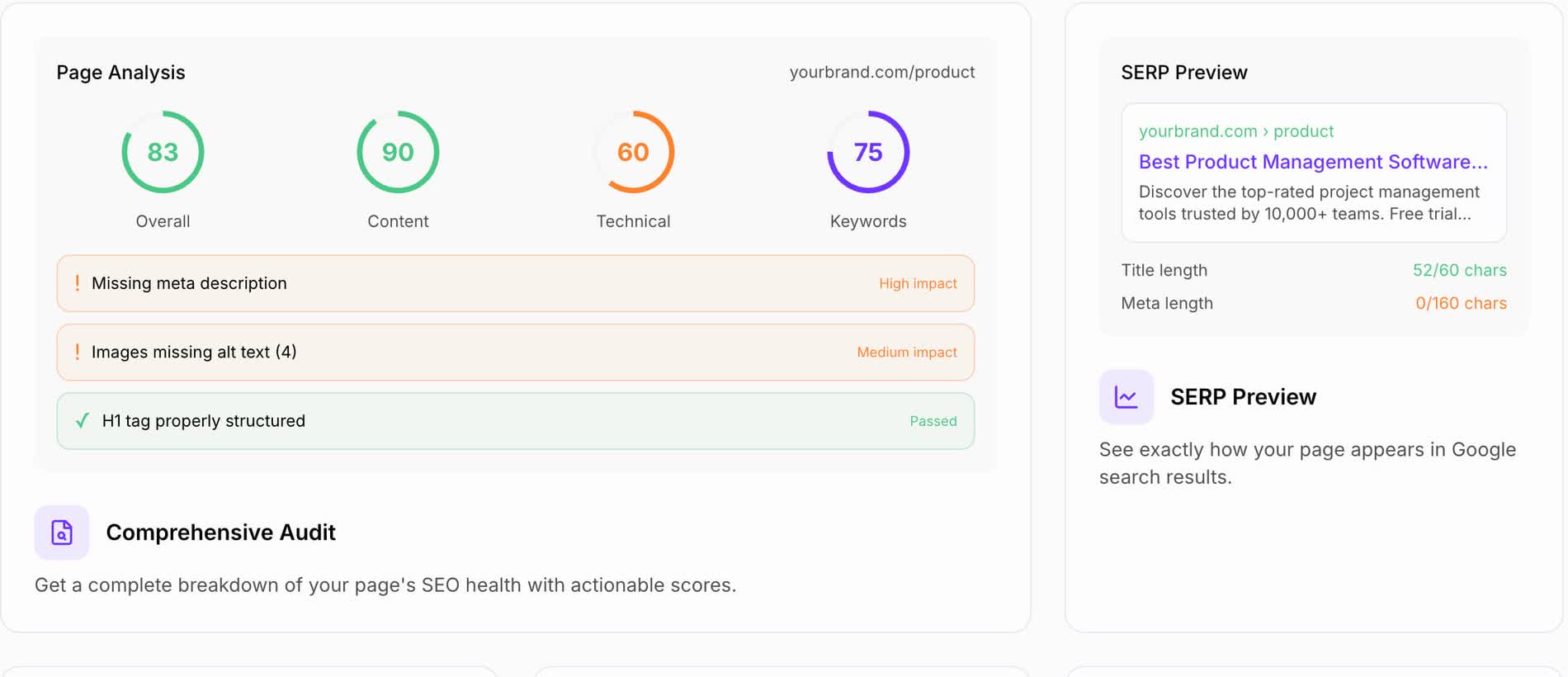
After rewriting, run the page through an SEO improver to catch weak headings, missing internal links, and on-page optimization gaps. Then manually review the recommendations. Automated tools are good at spotting patterns, but they do not understand your audience as well as you should. I treat the output as a second pass, not a final verdict.
A Practical 2026 SEO Checklist
If you want the short version, use this:
- Pick topics based on intent and business value, not volume alone.
- Build topic clusters instead of isolated posts.
- Write direct answers early in the article.
- Add examples, proof, screenshots, or citations where they help.
- Use clear H1, H2, and H3 structure.
- Write title tags people actually want to click.
- Keep meta descriptions specific, even if Google rewrites them.
- Add internal links with descriptive anchors.
- Keep important content crawlable and visible in HTML.
- Improve LCP, INP, and CLS on mobile.
- Use structured data only when it matches the visible page.
- Add original images or video when they improve the answer.
- Earn authority through useful assets, PR, mentions, and links.
- Track impressions, conversions, and brand visibility, not just rankings.
- Refresh old pages before creating more average content.
Final Thoughts
The best SEO strategy for 2026 is not complicated, but it is less forgiving. That is the part I would emphasize most.
You cannot publish generic content, sprinkle in keywords, buy a few weak links, and expect the page to survive in a search landscape shaped by AI summaries, stronger competitors, and more selective users.
The fundamentals still work. They just need to be executed with more care.
Create pages that answer real questions. Show proof. Build topical authority. Keep the site technically clean. Make your content easy to scan, cite, and trust. Use AI tools where they help, but do not let them flatten your voice or replace judgment. In my experience, the best SEO work still feels like careful publishing, not mechanical optimization.
That is the version of SEO that still works in 2026.